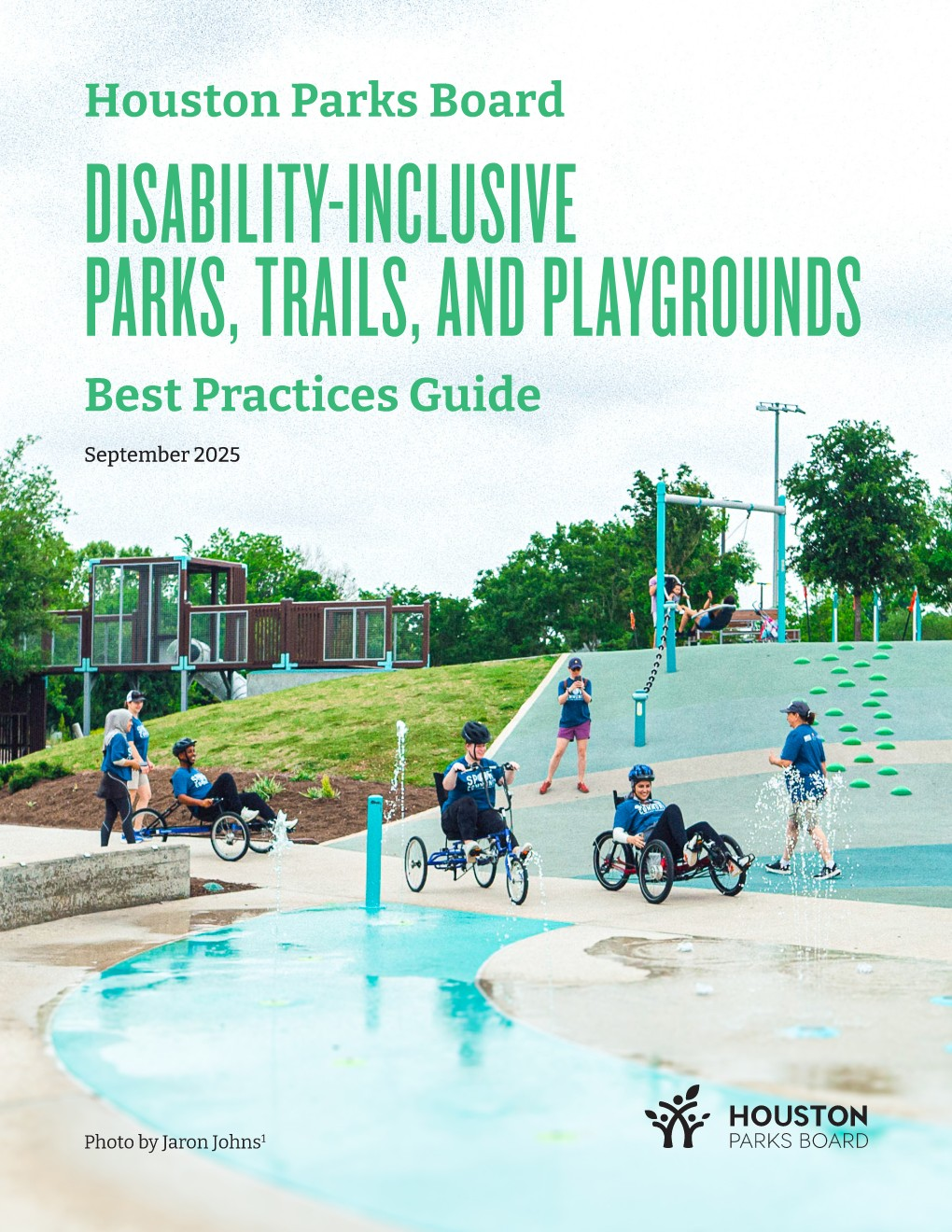
A joint perspective from Houston Parks Board Project Manager Lisa Graiff and Board Member Michelle Colvard.
Michelle’s Perspective: Why Inclusion Starts with Experience
I grew up in Houston before the Americans with Disabilities Act was established. At this time, rolling through the world in a wheelchair included navigating curbs with no ramps, playgrounds with no access points, and parks that welcomed everyone…except kids like me. I was born with spina bifida and used a wheelchair from childhood, but I was also an energetic kid who loved to move. I had the strength to fly across a playground, if only I could reach it. Instead, I often sat at the edges watching other kids play, learning early how powerful design can be in shaping whether you feel included or invisible.
Those experiences stayed with me into adulthood. And later, when I studied public health, I realized they weren’t simply personal memories, but pieces of a larger pattern. People with disabilities weren’t even recognized as a health-disparity population until 2023, despite decades of evidence showing that inaccessible environments contribute directly to higher rates of chronic disease and physical inactivity. Parks and trails should support health for everyone, but too often they unintentionally create barriers instead.
Over the years, I’ve had countless conversations with designers, planners, and architects who genuinely want to build spaces that work for everyone. They ask thoughtful questions. They care deeply about inclusion. But without clear, centralized guidance, they’re often left searching for answers or reinventing the wheel. I found myself giving the same advice again and again, not because designers weren’t listening, but because the information wasn’t easy to find.
That’s when it became clear: if we want disability inclusive parks to become standard practice, we need to make the knowledge accessible, too.
Where Lived Experience Meets Design Practice
Michelle’s lived experience and public health background helped illuminate the gaps. Lisa’s design and project management experience helped shape the solution. Houston
Parks Board, a non-profit that has been working since 1976 to expand, improve, and protect parks and greenspace in the Houston region, brought them together to work on the solution. As a Board Member and a Project Manager at Houston Parks Board, respectively, they enthusiastically supported Houston Parks Board’s assessment of the need for a centralized, accessible resource that could support designers, planners, and community advocates alike. Hence, the Houston Parks Board Disability-Inclusive Parks, Trails, and Playgrounds Best Practices Guide was born.
Lisa’s Perspective: Why Guidelines Matter
Guidelines pull together the best information on a subject and put it in one easily accessible place. It’s a little ironic to think that to make a park more disability inclusive, the information itself needed to be more accessible, but that has indeed been the case.
As a former architect and now Project Manager of parks and trails projects at Houston Parks Board, I often found myself wishing that information on how to improve accessibility and inclusivity was easier to find. With deadlines looming and standards already set, taking the time to track down best practices that go beyond ADA – with the intent of raising the level of accessibility for everyone – didn’t always happen. That’s one reason Houston Parks Board put together these guidelines, thanks to generous funding from The Brown Foundation, Inc. They start to answer questions like: What’s the farthest accessible parking should be from key park elements? How long can a slope be and still feel comfortable and accessible for most users?
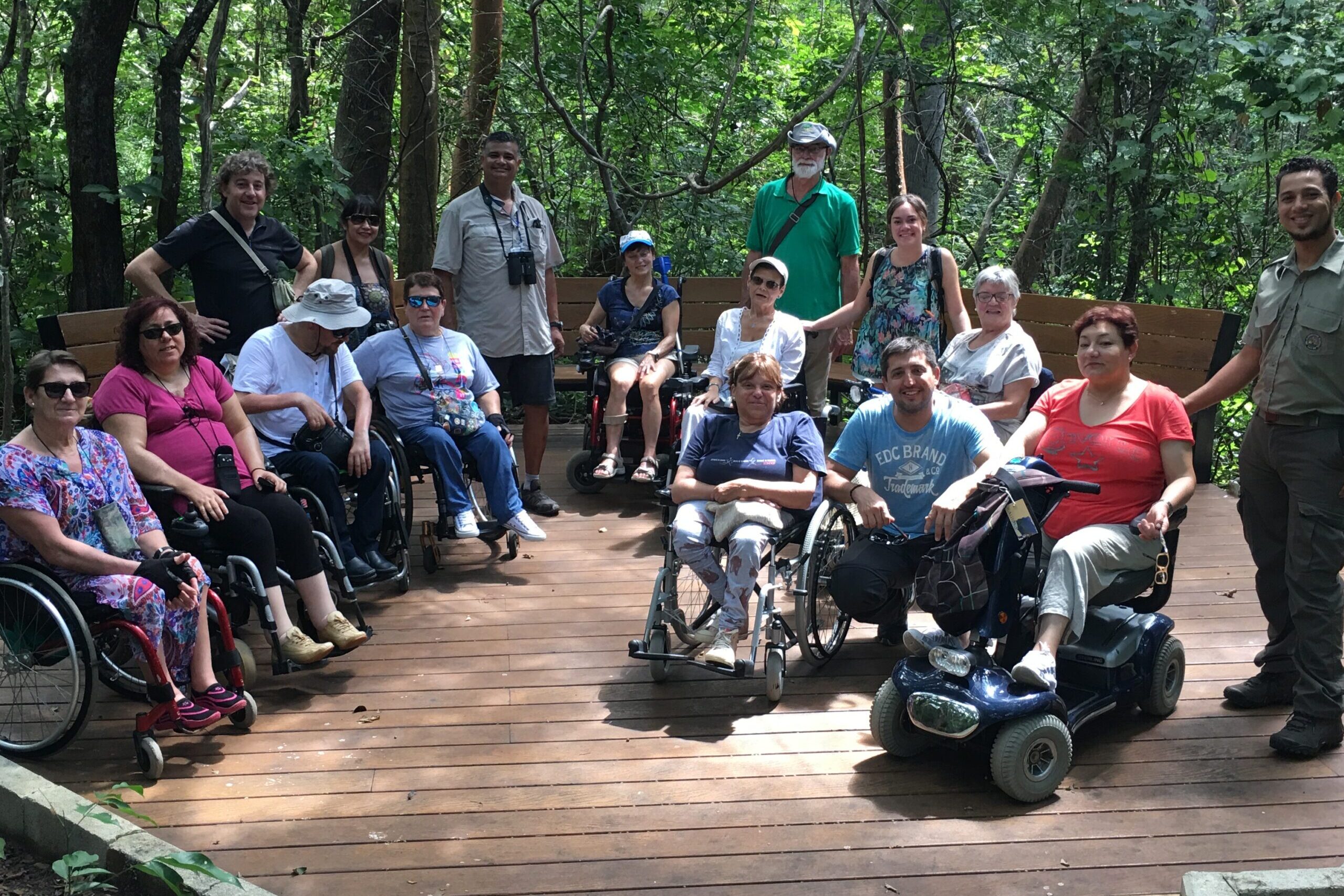
Additionally, parks and trails provide most of their physical and mental health, community cohesion, transportation, and access benefits when people use them. The more people who feel welcome and able to enjoy these spaces, the more benefits parks and trails bring. We want our work to be as impactful for the community as possible and that starts with disability inclusion. Why? Because over 40% of American adults are currently affected by a disability and even more have been or will be at some point in their lives. And yet many of our inherited parks and trails still don’t meet baseline ADA standards, let alone go beyond them.
If we want more people to benefit from our parks, we need to continue improving accessibility and inclusion. This really hit home for me during the years I cared for my elderly mother before she passed. She used to love going to the park. It lifted her mood and offered an opportunity for gentle exercise and interaction with neighbors of all ages. However, as she became weaker and unsteady on her feet, it became apparent that our neighborhood park was not easy for her to navigate. When she needed the mental and social boost the most, the park became inaccessible for her. That experience is part of the reason I care so much about increasing inclusivity throughout our parks system.
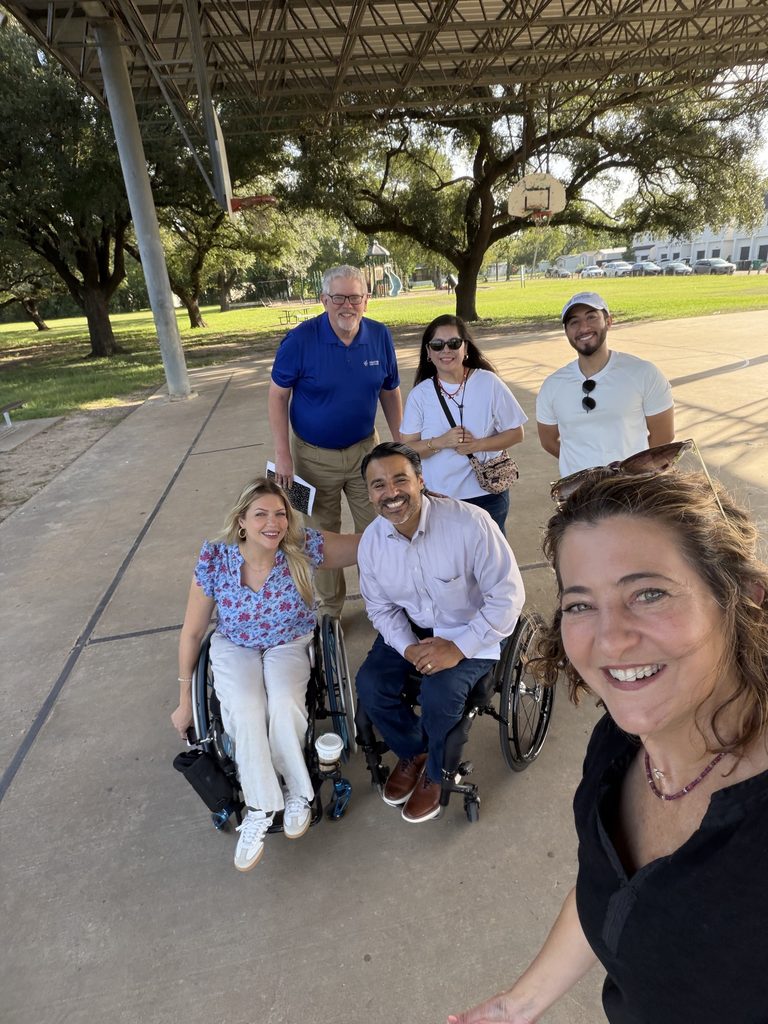
Houston Parks Board is fortunate to have Michelle Colvard on our Board of Directors. Not only did she advocate for undertaking the guidelines’ development, but she served as an advisor throughout the process.
Together with the team at Houston Parks Board, we put together a scope of work, hired a consultant team, identified steering committee members, and spent eight months working to craft the guidelines document. Through research, stakeholder and focus group input, and lots of discussion, we created the Houston Parks Board Disability-Inclusive Parks, Trails, and Playgrounds Guidelines. We built on the great work of others to create this tool centered around the Houston region but designed so it can be used by parks and trails groups nationwide.
A Living Document for a Growing Movement
These guidelines are a starting point. Now comes the harder work: implementing design recommendations, updating standards where needed, and raising the level of disability inclusion across our parks and trails system. It’s a big job and we can’t do it alone.
We welcome insights and recommendations from others as we continue to improve this living document. We encourage you to download the guide, share it, use it, and let us know how your journey toward inclusion develops.
Because parks should be places where everyone belongs. And inclusion, like any good trail, is something we build together.
Click here to download the guide.