Sarah Galbraith Laucks, longtime disability health educator and also a mom, shares why the usual lice fixes fail our families, and explains the calmer, gentler way back to your routine.
By Sarah Galbraith Laucks Former Director of Education and Events, Abilities Expo (2007 to 2018, and 2021 to 2024).

If you are raising a child with a disability or complex medical needs, then you already know the particular weight a note from school can carry. When that notes opens with the words: “a case of head lice has been reported in your child’s classroom” it’s an extra you just don’t need in your world. For most families it is a nuisance. But for families of kids with disabilities that note tends to land somewhere heavier, settling on top of therapy appointments and medication schedules, sensory sensitivities, and the quiet math we run daily to keep life moving.
I’ve spent more than a decade in disability health education, most of it building the learning programs for Abilities Expo, and I am also a mom. I remember the day I got a school note about lice, and I’ve seen it arrive for many other families too. I want you to know what I’ve learned. What I wish someone had told me back then. That this lice problem is solvable, you’ve done nothing wrong, and you are not facing it alone.
Here is what I’ve discovered….
KEY TAKEAWAYS
• More than 98% of head lice in the United States now survive the active ingredients in common over-the-counter (OTC) treatments like Nix and RID.[3]
• Lice resistance works much like antibiotic resistance: repeating a product that stopped working will not change the result.
• Natroba™ (Spinosad) is a prescription head lice medicated shampoo that kills lice and their eggs on first use, and requires no nit combing for most patients.[1,2]
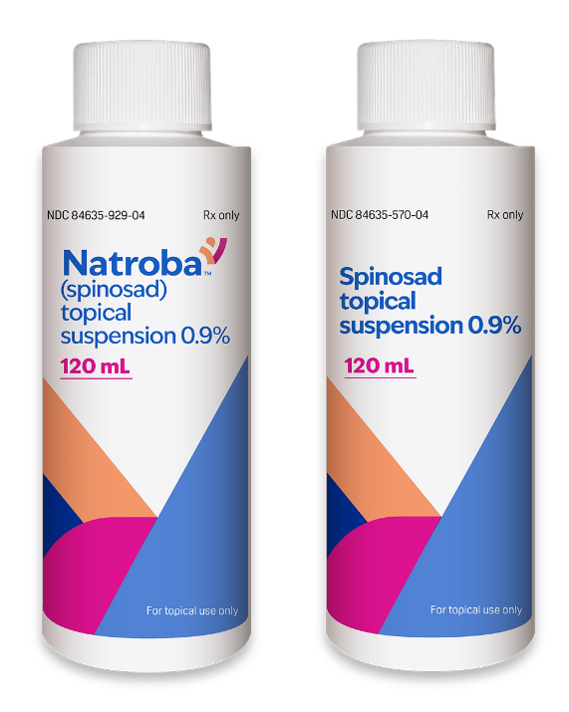
• For head lice, it is FDA-approved for adults and children as young as 6 months and is covered by many major insurance plans, including Medicaid.[1]
• For families managing complex medical needs, confirm the plan with your child’s care team before starting any new treatment.
Why the Usual Lice Fixes Tend to Fail Families
Most of us begin in the same place, standing in the pharmacy aisle reaching for the familiar boxes of Nix® or RID, because that is what we have always been told to do.
Here is the truth that I feel lifts a surprising amount of guilt the moment you hear it — those products mostly do not work anymore.
Their active ingredients, permethrin and pyrethrin, have been used on head lice for more than 20 years, and across the decades of heavy use, the lice have learned to survive them.
If you treated your child faithfully for head lice, exactly by the instructions on the box of Nix or RID, and yet watched the lice march right back into their hair and your home – please know that failure is unrelated to your careful effort.
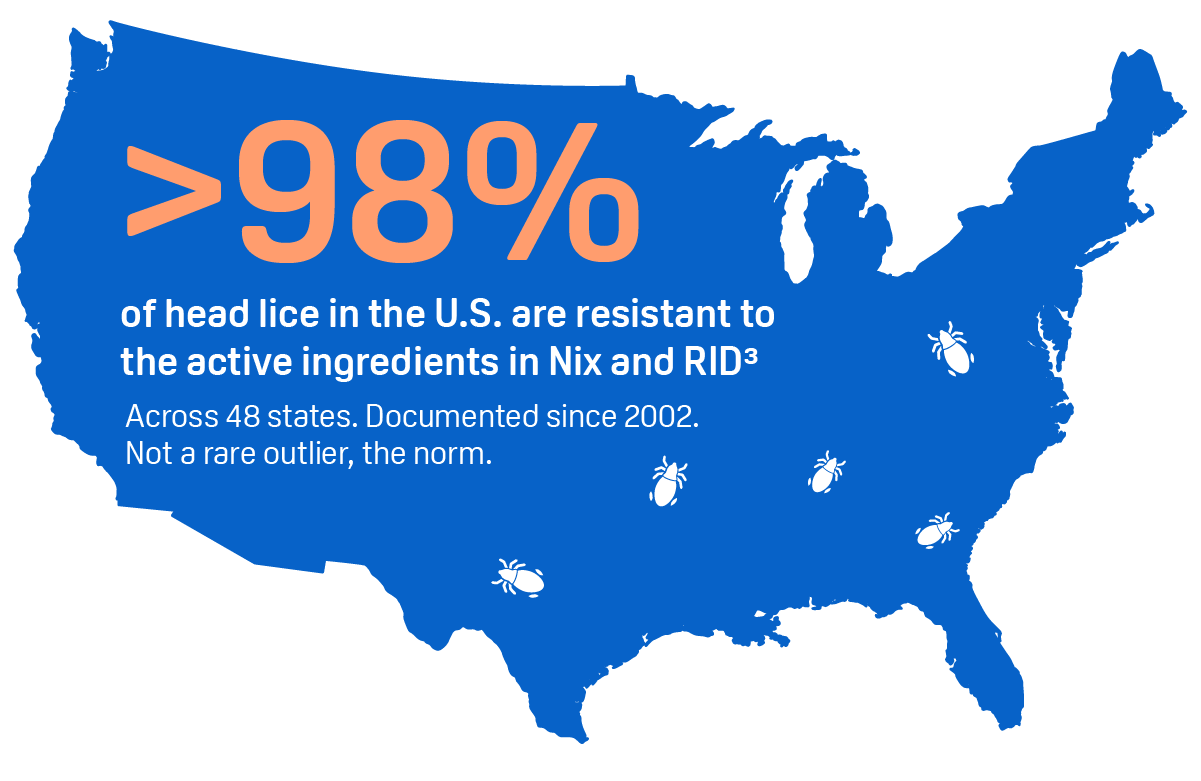
The science is not subtle about it. The most recent nationwide survey, published in 2016, gathered lice from 48 states and found that more than 98 percent of live now carry a genetic change that lets them shrug off those very ingredients.[3]
If you are raising a medically complex child, this pattern likely feels very familiar -because you’ve lived it with antibiotics. When a remedy is used widely enough and long enough, the thing being treated adapts until the remedy stops working. When you try one of these solutions and it does not work, it’s a common reaction to reach for a second or third box of the same product. Thinking you just need to repeat the process for success. But what the science now tells us is that in the case of head lice it’s the same as handing a germ the very antibiotic it has already outsmarted.
When you’ve tried a few boxes of treatment and had no success you’ll probably feel worn down and out of patience. You might turn next to a professional lice removal clinic. The thought of handing the whole ordeal to someone else can feel like a lifeline. For some families it is the right choice. It comes at a price, though, paid in the two currencies many of us are often short on: money and time.
These clinics are typically payment due at the time of service, and you will have to pay out of pocket. Billing insurance or Medicaid is not an option. A single visit can turn into the need for multiple visits, given a single visit will not remove nits (eggs) which hatch later. Sessions stack up on top of the other appointments you already have plus all the driving that fills your average week. When a schedule is already stretched thin, trading one draining problem for a costly, time-hungry errand is perhaps not much of a trade at all.
A Different Kind of Treatment, Built on a Different Idea
When the drugstore options have let you down and the lice clinic feels out of reach, there is a third path many families do not know to ask about. It’s Natroba™(Spinosad) and it’s a prescription medicated shampoo that works on an entirely different principle.
Its active ingredient, spinosad, is drawn from a tiny organism that lives in soil, and it belongs to a different medicine family than the old drugstore compounds, which is precisely why the lice that survived Nix have no built-in way to resist this prescription shampoo. To date, there is no documented resistance to sinosad among head lice in the United States.[1,4]
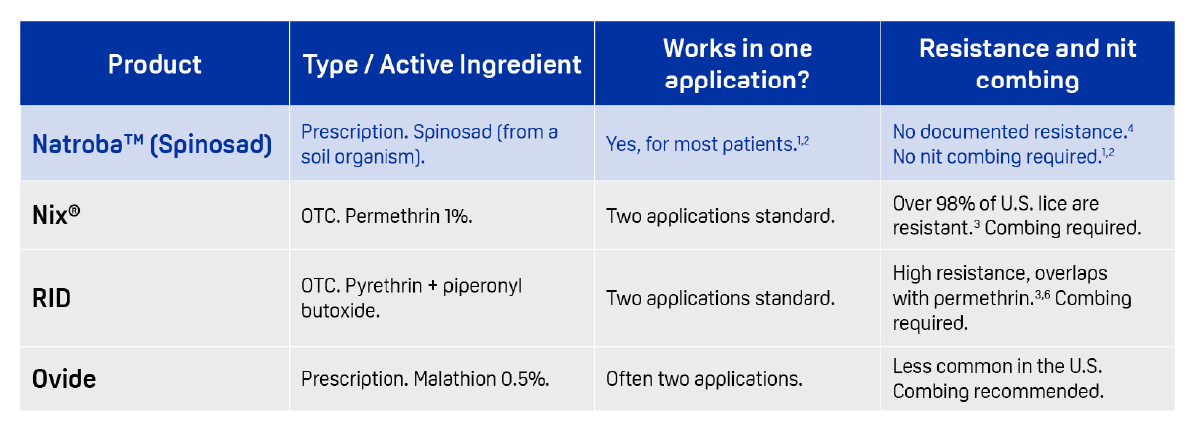
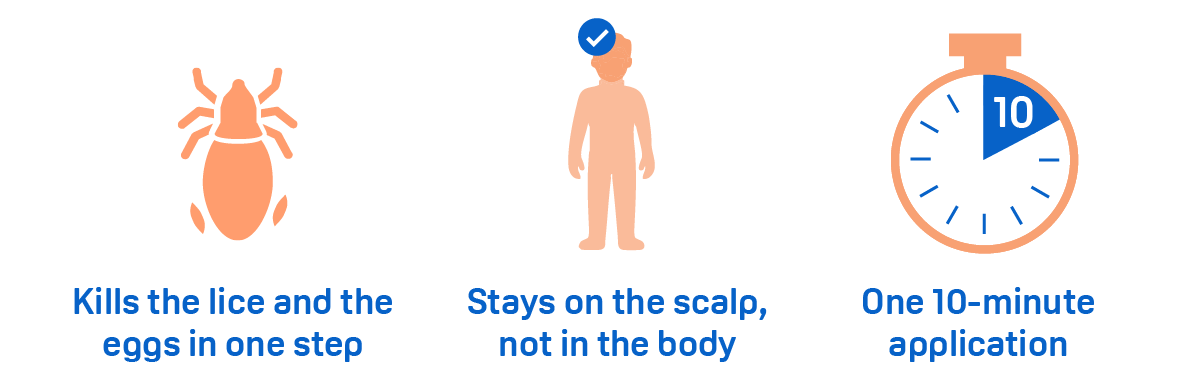
Natroba™ (Spinosad) kills both the lice and their eggs in a single ten-minute application, which is why no nit combing is required for most patients, sparing families the nightly ritual of dragging a comb through the hair of a squirming, worn-out child.
This medicated shampoo does its work on the surface of the scalp and is not absorbed into the body, so it will not interact with any other medications.
It is approved by the FDA for adults and children as young as six months, it is non-toxic, and it is covered by many major insurance plans, including Medicaid.
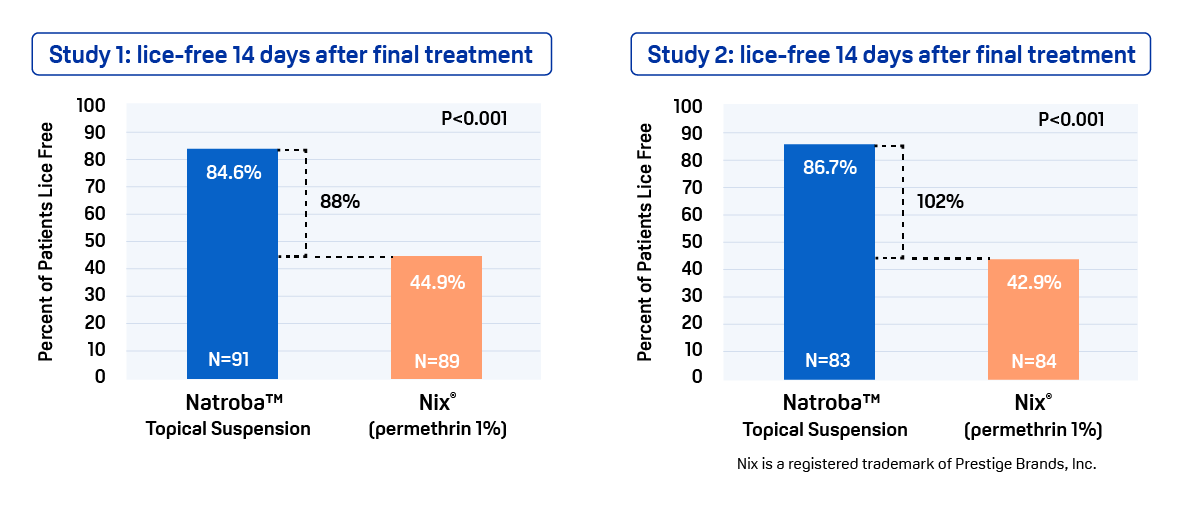
And when it was studied head to head against Nix in two clinical trials, roughly 86.7 percent of people were lice-free two weeks later, compared with 42.9 percent of those who used Nix.[1,2]
Why Natroba Matters Even More When Your Child’s Needs Are Complex
Two details in the above information deserve extra mention, because of what they mean for families like yours.
The first detail is that the medicine stays on the scalp rather than traveling through the body.[1,4] For a parent who already keeps a careful mental ledger of everything a child takes, that is a real comfort, and it is exactly the sort of thing worth raising with your care team: how does any new treatment sit alongside the rest of my child’s routine?
You understand that balance better than anyone, and your provider is there to help you weigh it.
The second detail is the single application. A child who cannot endure a long combing session, who comes undone by sensory overload, or whose week is already crowded with therapies simply does not have the reserves for the treat, wait, comb, and treat-again marathon common with Nix and RID.
One gentle ten-minute application is need and you are finished. You know that’s more than mere convenience for your family – it is breathing room.
Get Natroba Now, Without Adding Another Appointment
Here’s something I really appreciate for any of us with a more-than-full calendar. You do not have to sit in another waiting room to begin using Natroba.
At natroba.com you can meet with a licensed provider by telehealth, often in minutes, right from your own home. If that provider decides Natroba™ (Spinosad) is right for your child, the prescription can be picked up the same day at your local pharmacy of choice (including Walmart), or arrive discreetly at your front door, whichever is the right choice for you.
On a week already full and stretched to its limits, skipping one more trip can mean the difference between putting head lice behind you today or spending more time and money chasing solutions that aren’t solving the problem.
A Calm Back-To School Plan After Lice Begins with Natroba
Whatever treatment you and your provider settle on, a few steady habits make the whole thing gentler. Start by confirming the symptoms truly are from lice, since a wet fine-tooth comb remains the most reliable way to know for certain.
Bring your child’s care team in before you begin, especially if there are other medications or a skin condition in the picture, because for a medically complex child that single conversation is the most important step of all.
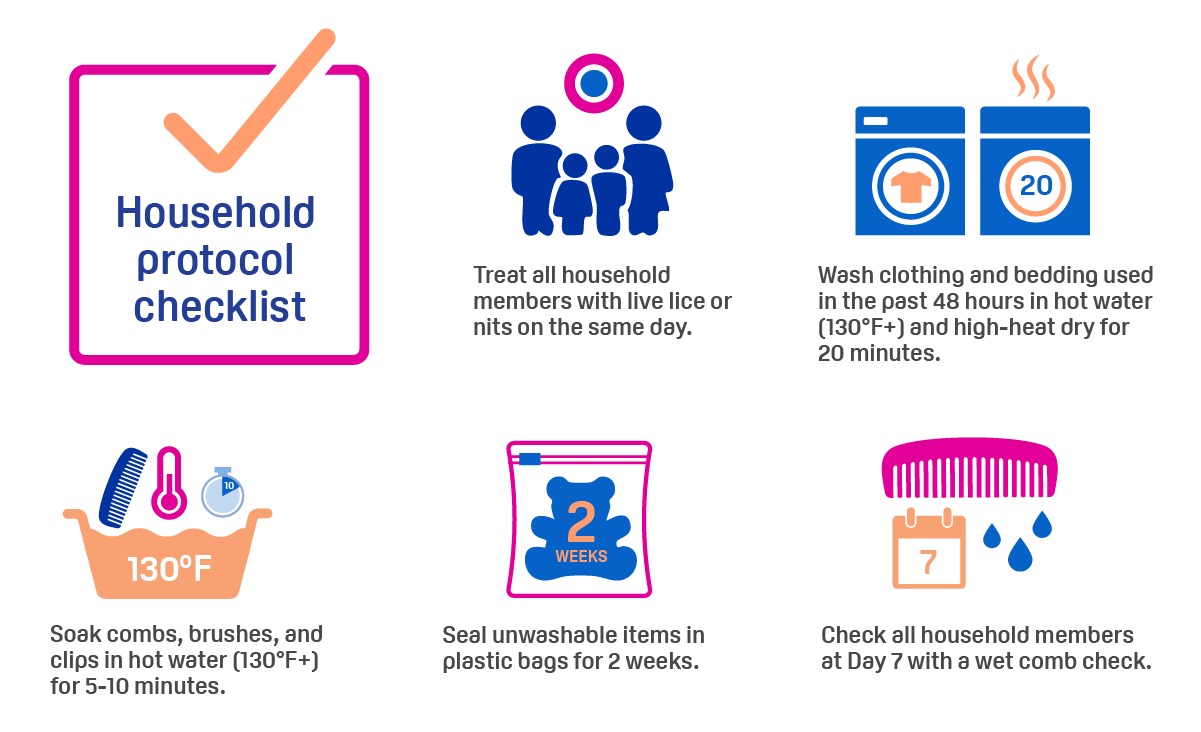
Treat everyone in the household who needs it on the same day, since staggered treatment is one of the most common reasons lice return.
Keep the laundry simple. Wash recently used bedding and clothing in hot water, at least 130 degrees Fahrenheit. Alternatively you can also put that bedding and clothes in a tightly sealed bag for two weeks. Despite what you may have heard, there is no need to fumigate your home, because lice that fall away from the scalp do not survive long.
And if an over-the-counter (OTC) product has already failed you, resist the pull to buy another product built on the same ingredientbecause it will only fail you the same way.
Get Back To Life Fast With Natroba.
Head lice is a major inconvenience, but it is solvable.
Learn more and begin now at natroba.com.
You have more important things to both handle and enjoy than this surprise problem.
And the good news is, with Natroba, head lice can be only a bit of temporary noise.
Skip the Aisle. Skip the Clinic. Skip the Wait.
Learn more or begin now at natroba.com or ask your doctor about Natroba™ (Spinosad).
About the Author

Sarah Galbraith Laucks develops and produces content programs for shows, conferences, and events, and specializes in educational content for the health, wellness, and disability communities. She served as Director of Education and Events for Abilities Expo for more than a decade, designing the attendee learning programs for the largest consumer shows for the disability community in North America.
Today, she is a principal owner of True Leaf, a firm that empowers success for health-conscious brands, disability organizations, and organic farms. A homeschooling parent to her son Max, she has supported thousands of parents of children with disabilities and chronic conditions nationwide. She also raises heritage-breed chickens from the Livestock Conservancy’s Conservation Priority List on her Ohio farm.
This article is educational and is not medical advice. Always consult your healthcare provider for what is bestfor your individual needs. Sarah Galbraith Laucks is a sponsored content creator, and this article was created in partnership with Cipher Pharmaceuticals, the maker of Natroba.
| IMPORTANT SAFETY INFORMATION |
| Indication Natroba™ (Spinosad) Topical Suspension is a pediculicide indicated for the topical treatment of head lice infestations in adult and pediatric patients six (6) months of age and older. |
| Warnings and Precautions Natroba™ (Spinosad) Topical Suspension contains benzyl alcohol and is not recommended for use in neonates and infants below the age of 6 months. Intravenous administration of benzyl alcohol has been associated with serious adverse reactions and death in neonates and low birth-weight infants. |
| Adjunctive Measures Natroba™ (Spinosad) Topical Suspension should be used in the context of an overall lice management program: Wash in hot water or dry-clean all recently worn clothing, hats, used bedding, and towels. Wash personal care items such as combs, brushes, and hair clips in hot water. A fine-tooth comb or special nit comb may be used to remove dead lice and nits. |
| Adverse Events The most common adverse events (occurring in ≥1% of subjects) for head lice treatment were application site redness (3%), eye redness (2%), and application site irritation (1%). Use Natroba™ (Spinosad) only on dry scalp and dry hair. Repeat treatment only if live lice are seen 7 days after the first treatment. See full Prescribing Information and Patient Information. You are encouraged to report negative side effects of prescription drugs to the FDA. Visit www.fda.gov/medwatch or call 1-800-FDA-1088. You may also contact Cipher Pharmaceuticals US LLC at 1-855-628-7622. |
NAT-BTSBP-000
References
1. Natroba (spinosad) topical suspension, 0.9% [prescribing information]. Cipher Pharmaceuticals US LLC; 2025.
2. Stough D, Shellabarger S, Quiring J, Gabrielsen AA. Efficacy and safety of spinosad and permethrin creme rinses for pediculosis capitis (head lice). Pediatrics. 2009;124(3):e389-e395.
3. Gellatly KJ, Krim S, Palenchar DJ, et al. Expansion of the knockdown resistance frequency map for human head lice (Phthiraptera: Pediculidae) in the United States using quantitative sequencing. J Med Entomol. 2016.
4. Data on file. Cipher Pharmaceuticals US LLC.
5. Centers for Disease Control and Prevention. Clinical Care of Head Lice. Updated January 31, 2025.