Helping People Get the Benefits They Deserve: The Enduring Mission of Disability Benefits of America
Navigating the federal disability benefits system can be challenging for anyone. With high initial denial rates, including a 62% initial denial rate for Supplemental Security Income (SSI) and Social Security Disability (SSDI) and 40% for Veterans Affairs Disability Compensation (VA Disability), as well as complex processes that can take several months if not years, many people give up or lose hope.
Far too often, people try to navigate the disability benefits process themselves, only to discover that it is far more complicated than what they expected or that they have made a mistake which results in their claim being denied.
For over 30 years, Disability Benefits of America has served as a bridge for individuals navigating the often-overwhelming landscape of federal disability programs, guiding them through every step of the process to make sure they receive the maximum benefits they are eligible for as quickly as possible.
“Where People with Disabilities Benefit is more than just a slogan, it is a reflection of our company’s mission and culture,” according to Bryan Haye, Owner and Founder of Disability Benefits of America.
Haye also believes that “what distinguishes Disability Benefits in addition to helping people secure SSI, SSDI and VA disability benefits is that we concentrate on a person’s overall financial health in order to have greater impact on their quality of life.”

Navigating the Three Pillars of Federal Support
Understanding the difference between SSI, SSDI and VA disability benefits is the first step in a successful claim and receiving benefits. While all three federal disability programs provide financial aid, their eligibility requirements vary significantly.
Comparing SSI, SSDI, VA Disability Compensation
| Program/Feature | Supplemental Security Income (SSI) | Social Security Disability (SSDI) | VA Disability Compensation |
| Primary Basis | Financial need/Limited income | Work history & tax contributions | Service-connected injury/illness |
| Disability Scale | “All or nothing” (Total disability) | “All or nothing” (Total disability) | Graduated scale (10% to 100%) |
| Duration Requirement | Must last 12+ months or be terminal | Must last 12+ months or be terminal | Varies; can be temporary or permanent |
| Health Care | Often leads to Medicaid | Often leads to Medicare | VA Health Care |
“By understanding the intricacies of the Social Security Administration (SSA) and the Department of Veterans Affairs (VA), having direct relationships with these agencies and having dedicated teams of Accredited Disability Specialists, we are able to create a personalized approach to getting people the financial and medical benefits they deserve,” says Sarah Overton, a Senior Disability Representative and Vice President at Disability Benefits.
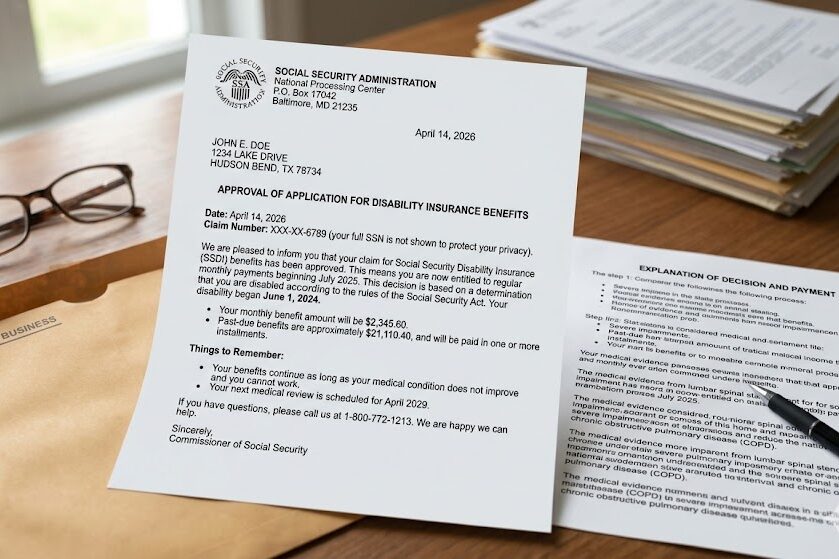
Keys Factors in Securing a Successful SSI or SSDI Claim and Benefits
While SSI and SSDI cover a wide range of disabilities and impairments (physical, mental, neurological and more) for people of all ages, The Social Security Administration has a strict definition of a disability.
To qualify for SSI or SSDI, you must prove you cannot perform any “substantial gainful activity.”
Most claims are denied not due to the lack of disability or merit, but rather due to technical or medical documentation issues, including:
- A lack of “hard” medical evidence (e.g., specific imaging or lab results).
- The person applying is still earning above the Substantial Gainful Activity (SGA) limit.
- Failure to follow prescribed treatment plans.
- The condition is not expected to last at least 12 months.
Regardless of who is filing the claim, there are certain factors that will be critical to a successful claim:
- Evidence Gathering: For example, Disability Benefits works with a claimant’s doctor to collect the required medical records, test results and treatment histories that meet the SSA’s specific “Listing of Impairments.”
- Form Management: Complex filings, such as the SSA-3368 (Medical Condition Report) and SSA-827 (Authorization to Release Information), must be complete, accurate and free from clerical errors that could delay the claim.
- Appealing Denials: Since many initial claims are rejected, a meticulous review of a denied case is necessary to identify and fix critical issues before an appeal.
Senior Disability Representative Sarah Overton who has been with Disability Benefits for 19 years points out, “claims files can have thousands of pages of documents that require careful examination to build a legal theory for why some should be found disabled and granted their appeal and benefits.”
Having knowledge of the application process, the various stages of appeals and expertise in gathering medical evidence and building legal justification for a claim are all factors that should be taken into account when seeking disability benefits.

Why Professional Assistance Matters
Applying for disability can be a multi-year journey fraught with legal jargon and rigid deadlines. Professionally Accredited Disability Representatives offer several potential benefits to people with disabilities and their families.
- No Upfront Costs: Most reputable organizations, including Disability Benefits, operate on a contingency basis—meaning they only get paid if you win your case. In the case of Disability Benefits, the company only receives a “capped” percentage of your backpay (the initial check only), with the fees being paid directly by Social Security.
- Reduced Stress: By handling communication with the VA and Social Security, representatives allow claimants to focus on their health rather than paperwork.
- Strategic Insight: They know how to translate a medical diagnosis into “functional limitations” that the government recognizes as a reason for inability to work.
While you can apply for these benefits on your own, having an accredited representative who specializes in disability benefits often increases the likelihood of approval by ensuring the “nexus” between your condition and your inability to work is clearly documented.
“When my husband was in a motorcycle accident, our whole world turned upside down… he couldn’t work anymore, and we didn’t know how we were going to make it,” says Jannira Canalas. “They walked us through every step (of the process) and took care of everything. They got my husband approved for Social Security Disability and made sure we were approved all the way back to date of the accident… they truly gave our family hope when we needed it the most.”
Veterans (VA) Disability Compensation
The Department of Veterans Affairs (VA) provides disability compensation for thousands of different conditions, but a small group of impairments account for most service-connected claims, including:
- Auditory Conditions, including Tinnitus (ringing of the ears) and hearing loss.
- Musculoskeletal and Joint Issues such as knee conditions, back and neck pain, and ankle and arm limitations.
- Mental Health Conditions. Among them Post-Traumatic Stress Disorder (PTSD), depression and anxiety; often claimed as secondary to a physical injury.
- Neurological and Other Conditions ranging from Sciatica to migraines, to sleep apnea and scars resulting from injuries, burns or surgeries performed during military service.
Under recent legislation like the Presumptive Conditions (PACT Act), certain disabilities are now presumed to be service-connected for veterans exposed to burn pits or other toxins, including:
- Respiratory conditions like asthma, sinusitis and rhinitis.
- Various cancers (e.g., reproductive, respiratory and gastrointestinal).
- Hypertension (high blood pressure) for certain Vietnam-era veterans.
Eligibility requires a current diagnosis, an in-service event or injury, and a medial nexus connecting the two.
Unlike Social Security disability, each category of disability or impairment under the Veterans Disability Compensation is applied for separately and is rated to determine the percentage of eligibility.
For many veterans, a VA rating is just the beginning. Jeff Horne, Veteran Outreach Specialist at Disability Benefits, and a 28-year Marine Corp veteran, works with veterans to help educate them and make them aware of the benefits they may be eligible for and how Disability Benefits may be able to help them, including:
- Increasing Ratings: If a Veteran’s service-connected condition has worsened, DBA helps gather the evidence needed to file for an increase in their disability percentage (e.g., moving from 30% to 70% or 100%).
- Concurrent Benefits: Many veterans do not realize that they may be eligible for both VA benefits and SSDI simultaneously.
- Expedited Processing: For Veterans with a 100% Permanent & Total (P&T) rating, DBA can potentially help facilitate the SSA’s expedited claim process.
As Horne explains, “I often see homeless veterans and veterans who served their country who don’t have medical coverage or who can’t afford to pay their living expenses. There’s nothing more important to me knowing that I’ve helped a veteran get the benefits they deserve and have earned.”
“As a Vietnam Veteran, I had been receiving only $110 a month from the VA since leaving the service,” explains Leonard Dillard. “I never thought that would change until a friend recommended Disability Benefits of America, LLC. From the moment I reached out, they treated me with respect and truly cared about helping me. Thanks to their hard work and dedication, I’m now receiving over $2,500 a month… the difference this has made in my life is beyond words.”

A Passion for What We Do… Compassion for Who We Serve
Disability Benefits of America has helped more than 15,000 people obtain SSI, SSDI and VA disability benefits and other benefits that have provided much needed financial help, often at critical times.
“We understand the current changes to Medicare and the ins and outs of SSI, SSDI and VA benefits, but I think it’s the empathy and caring that we have for the people we help that makes Disability Benefits special,” states Karen Priddy, Sr. Intake Specialist.
Like others who work for Disability Benefits, Karen’s passion for disability advocacy comes from personal experience. Karen helps care for and advocate for her mother who lives with Parkinson’s disease, and her sister who lives with schizophrenia.
“Both in my job and in my personal life, I’ve witnessed how difficult it can be for families to navigate the benefits system without the right guidance. Being able to help others is what motivates us to do what we do – there’s nothing more important,” say Priddy.
If you have questions about SSI, SSDI, or Veterans Disability Compensation benefits, please feel free to contact Disability Benefits of America at 1-866-334-4070 or visit the website at www.disabilitybenefits.com